
Stoppered bottles have a specific kind of appeal — no visible pump mechanism, nothing plastic breaking up clean glass lines, just a bottle and a stopper that looks almost sculptural sitting on a vanity. It's a design choice that reads as considered, even old-fashioned in a good way. It's also, from a practical standpoint, one of the more finicky formats to get right, because unlike a pump you can test with a few presses, a stopper's fit is something that only really reveals itself over time.
Ground glass versus fitted stopper
There are two fundamentally different approaches worth knowing about. A ground glass stopper is precision-fitted to a specific bottle — the glass surfaces are machined to match closely enough that they create a near-airtight seal through friction and precise contact alone, no gasket or liner needed. This is the traditional, higher-end approach, and it means the stopper and bottle are effectively a matched pair; you generally can't swap stoppers between two "identical" bottles and expect the same seal quality, because the grinding is specific to each unit.
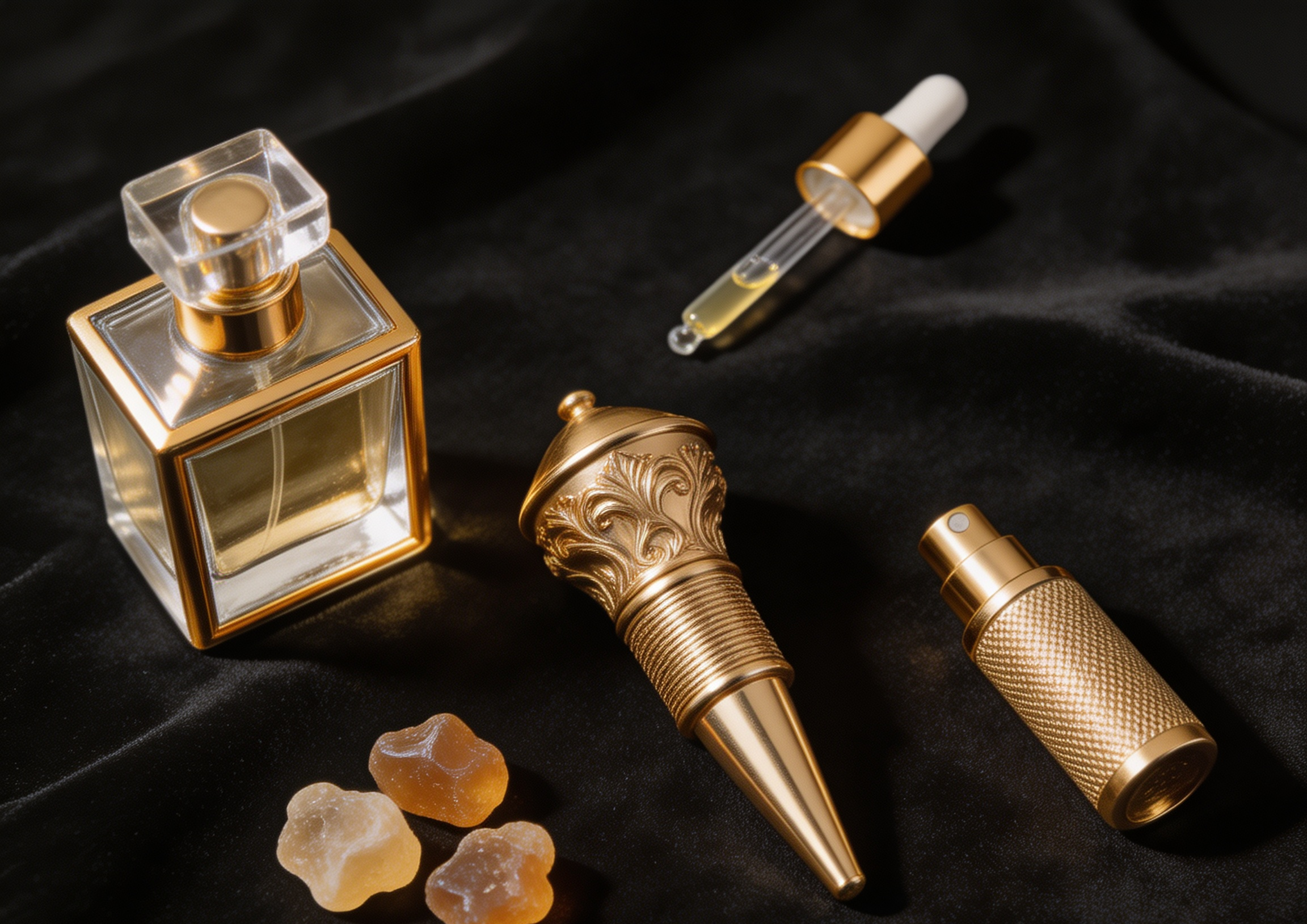
A fitted stopper, by contrast, usually relies on a rubber or silicone liner to create the seal rather than the glass-on-glass fit alone. It's cheaper to produce at scale and more forgiving of minor manufacturing variance, but the liner material is the weak point — it can degrade or lose elasticity over time, especially with prolonged alcohol contact, which slowly loosens the seal.
Why seal quality actually matters here
A glass perfume bottle with stopper that doesn't seal well isn't just a minor inconvenience — fragrance is genuinely sensitive to air exposure and evaporation, and alcohol-based perfume in particular will slowly lose top notes and overall intensity if the seal isn't tight. A customer who receives a beautifully stoppered bottle that quietly under-performs after a few months of normal use won't necessarily connect the issue to the stopper. They'll just assume the fragrance faded, which reflects on the formula rather than the packaging that was actually responsible.
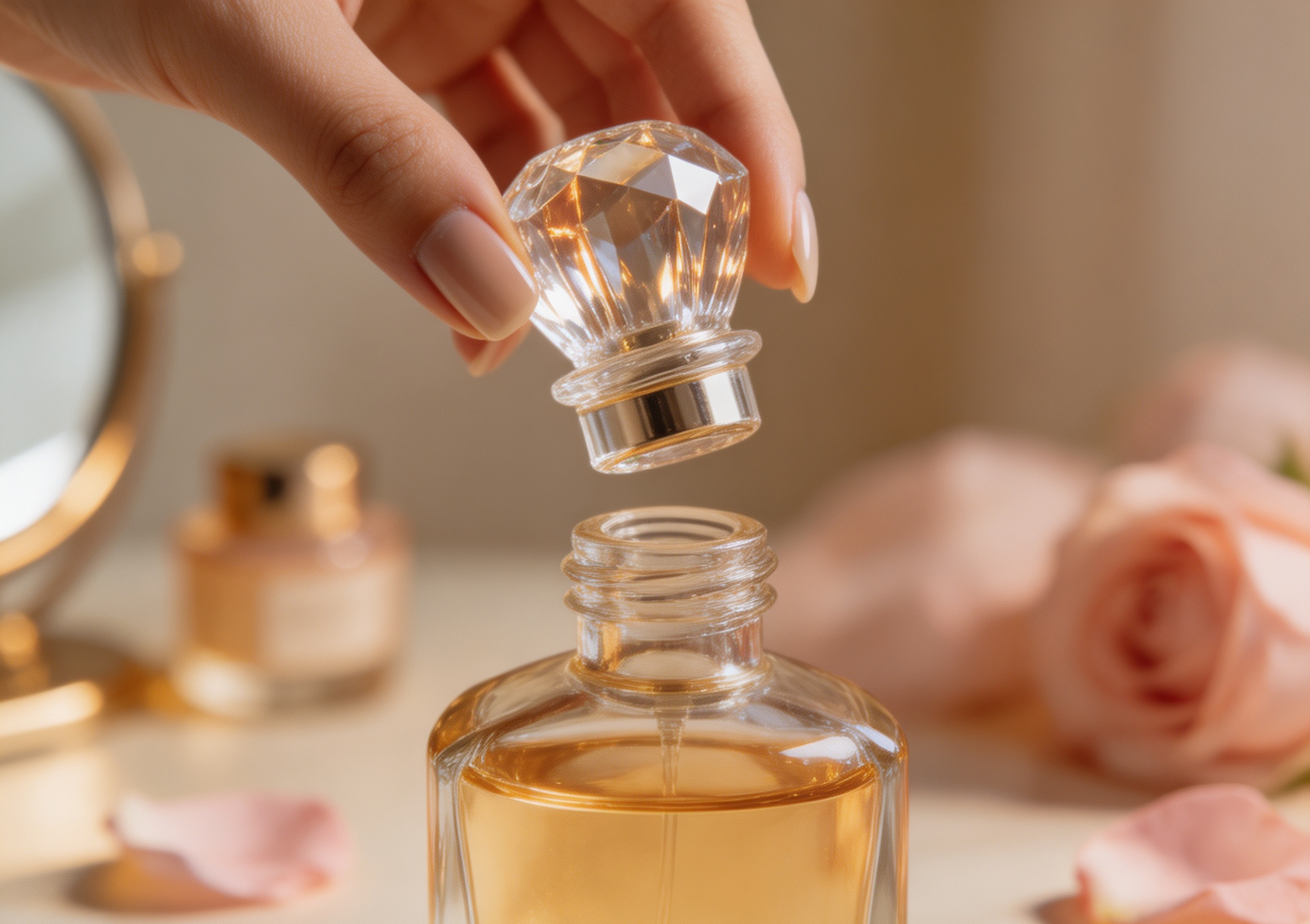
If you're evaluating a stoppered perfume bottle from a new supplier, it's worth doing a basic inversion test — turn a sealed sample upside down for a few minutes and check for any seepage around the stopper. It's crude, but it catches an obvious seal failure before it reaches a customer.
The application problem nobody mentions
Stoppers are elegant, but they're genuinely less convenient for daily application than a spray or roller, and that's worth being honest about in your product copy rather than treating it as a flaw to hide. Applying fragrance from a stopper usually means touching the stopper's wetted tip directly to skin, which some customers love as a ritual and others find messy or imprecise compared to what they're used to. Setting that expectation clearly upfront — this is a considered, tactile format, not a fast one — tends to produce happier customers than letting them assume it behaves like a standard spray bottle.
Sourcing tip
When comparing perfume stoppers across suppliers, ask specifically whether stoppers are individually fitted and tested per bottle, or manufactured to a general tolerance and paired at packing time. The first approach costs more and takes longer but produces a meaningfully better seal. For a premium or gifting-focused line, that difference is usually worth paying for.